

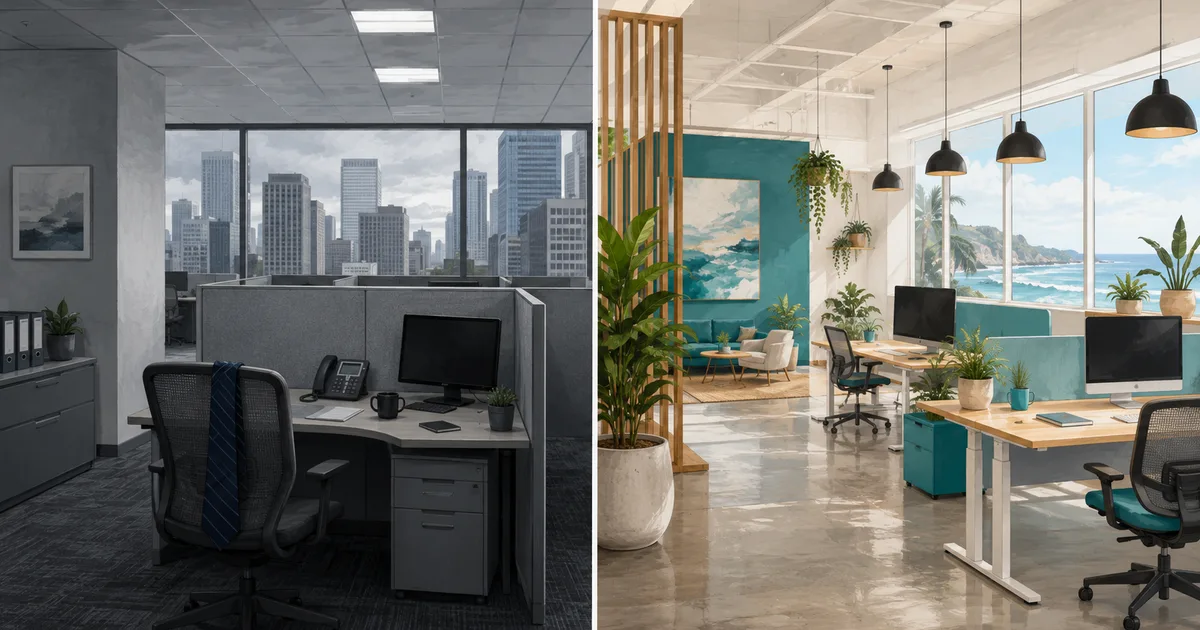
The way we work has changed dramatically, and so have our options for where we work. If you’re weighing up a traditional office lease against a coworking membership, the decision usually comes down to four things: cost, flexibility, culture, and control. Here’s an honest breakdown of each, with real Wellington numbers where they help.
The Traditional Office: Control vs. Cost
A traditional office lease gives you full control over your space. You can brand it, set the rules, configure the layout, and build a consistent culture inside your own four walls. But that control comes at a steep price:
- Long-term commitment. Commercial leases typically run for multiple years, with personal guarantees, bonds, and make-good clauses when you leave. Your space needs in year three are a guess you’re signing for today.
- Fit-out costs. Furniture, IT infrastructure, meeting room equipment, kitchen, typically $5,000–$30,000+ before anyone sits down, and largely unrecoverable when you move.
- Ongoing overheads. Utilities, cleaning, maintenance, internet, insurance, each a separate account to manage and a separate line in your books.
- Per-desk reality. CBD Wellington office space typically works out at $400–$800+ per desk per month before those extras.
For a solo operator or small team, this overhead is hard to justify, especially when your headcount fluctuates. Signing a multi-year lease for a team that might double or halve is the single biggest financial risk on this side of the ledger.
The Coworking Alternative: Flexibility, Instantly
A coworking membership flips the model. You pay one monthly fee that covers everything: internet, coffee, printing, meeting rooms, cleaning, and a professional address. The main benefits:
No lock-in. Month-to-month memberships mean you can scale up, scale down, or move on with short notice. At Lyall Bay WorkHub that’s 14 days’ written notice, and you sign a simple Membership Licence Agreement, not a commercial lease.
Instant setup. Walk in on day one and you’re operational. No fit-out delays, no furniture procurement, no IT setup, no waiting on a fibre install. The gap between “we need a workspace” and “we’re working” is one visit.
One invoice. Instead of juggling rent, power, internet, cleaning and coffee accounts, everything arrives on a single monthly GST invoice, one supplier, one line in your accounts. For a small business, the admin saved is real money.
Real community. Good coworking spaces attract interesting people, freelancers, consultants, remote workers, and small teams under one roof. That ambient network produces referrals and collaborations you can’t manufacture in a private office. (We’ve written about how that actually happens.)
A better lifestyle. At Lyall Bay WorkHub, “the office” is steps from the beach, above Parrotdog Brewery, with free street parking and a commute that runs against the CBD flow. For your team’s wellbeing, that’s hard to beat.
The Numbers: Wellington Coworking vs. Traditional Office
| Traditional Office | Lyall Bay WorkHub | |
|---|---|---|
| Setup cost | $5,000–$30,000+ | $0 |
| Monthly cost (1 desk) | $500–$900+ | $299/mo |
| Contract | Multi-year lease | Month-to-month licence |
| Internet | Extra | Included (2,000 Mbps) |
| Coffee | Extra | Included |
| Meeting room | Extra | Included for members (booking required) |
| Cleaning, power, rates | Extra | Included |
| Parking | Often paid | Free (street) |
The full desk-by-desk arithmetic, including parking and fit-out amortisation, is in our CBD office vs Lyall Bay desk comparison, and current Wellington market rates are in the 2026 coworking price guide.
When a Traditional Office Makes Sense
Coworking isn’t for everyone. A traditional office might genuinely suit you if:
- You have a large, stable team (15+ people), at that scale, per-desk lease economics can catch up
- Your work involves sensitive materials requiring dedicated physical security or compliance-controlled premises
- You need a heavily branded, client-facing space that’s entirely yours
- You have real certainty about your space needs for the next several years
The Middle Path Most People Miss
The choice isn’t strictly binary. Most coworking operators, ours included, offer shared office areas and private spaces within the hub: your team gets separation and identity, while the infrastructure and amenities stay shared, under a membership licence, not a commercial lease. For teams of two to eight, this captures most of what a lease offers with almost none of the risk. Private spaces at Lyall Bay WorkHub are configured around each client’s needs, enquiry first, then a layout and price.
Frequently asked questions
Is coworking cheaper than renting an office? For individuals and small teams, almost always, one monthly fee replaces rent, fit-out, utilities, internet, cleaning and coffee, and there’s no multi-year commitment. The equation only tightens for large, stable teams.
What’s the difference in commitment? A commercial lease typically binds you for years with bonds and make-good obligations. A coworking membership is month-to-month, at Lyall Bay WorkHub, cancellation is 14 days’ written notice before the end of a billing period, under a Membership Licence Agreement rather than a lease.
Can a small team get privacy in a coworking space? Yes, beyond hot desks, most spaces offer dedicated team areas or enclosed private spaces with no commercial lease to sign. Ours are built to order around the team’s needs, with terms agreed as part of the quote.
The Verdict
For most freelancers, remote workers, and small teams, coworking is the smarter financial and lifestyle choice, the multi-year risk simply isn’t worth it while your needs are still moving. The traditional office earns its keep only once scale and certainty arrive.
The best way to decide? Come in for a free day and see for yourself.